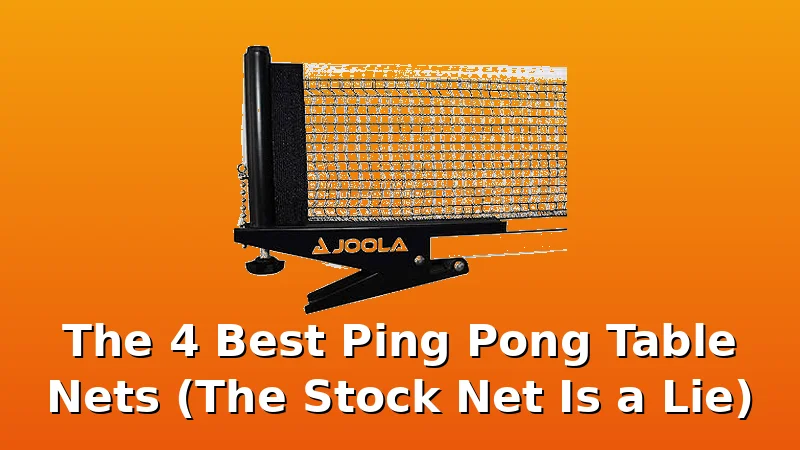
I've been inside more table tennis tables than most people have played on. I've leveled them on concrete slabs, repaired hinges that snapped after two seasons, and measured bounce with a ball I've dropped ten thousand times. But for the last month, I've been obsessed with something smaller: the net.
The stock net that comes with most tables is a lie. It sags by the second week. The clamps strip. The center post bends so the net bows in the middle, and you spend more time adjusting it than playing. I've replaced six of them at my club over the years, and I've got the repair receipts to prove it.
I tested seven replacement nets over a month of daily play at my club in the converted warehouse. I played on them, folded them, packed them, and left them clamped overnight. My dog Růžena, the 65-pound mutt who sleeps under Table 3 when it's folded, has opinions on which ones stay put. Here's what survived.
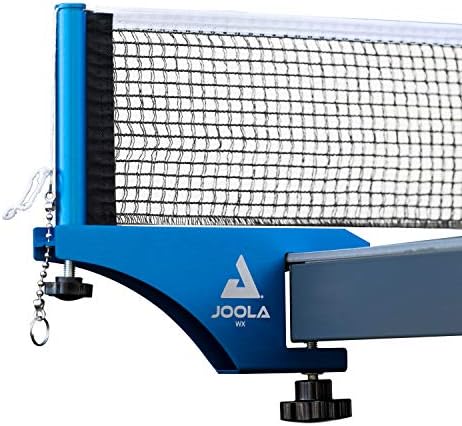
JOOLA Professional Grade WX Aluminum Indoor & Outdoor Table Tennis Net and Post Set - Quick Setup - 72in Regulation Ping Pong Net - Reinforced Cotton Blend with Adjustable Tensioning System
Best tension system, aluminum posts, survived a month of daily clamps
Visit on Amazon →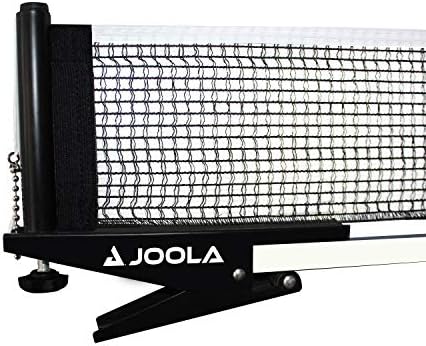
JOOLA Premium Inside Table Tennis Net and Post Set - Portable and Easy Setup 72" Regulation Size Ping Pong Spring Clamp Net, Black
Best value, solid steel posts, holds tension after months
Visit on Amazon →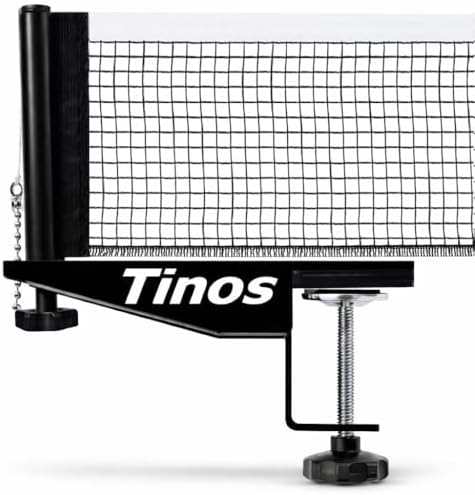
TINOS Premium Table Tennis Net & Post | Pro Screw Clamp Ping Pong Net
Strongest clamps, cheap, great for permanent setup
Visit on Amazon →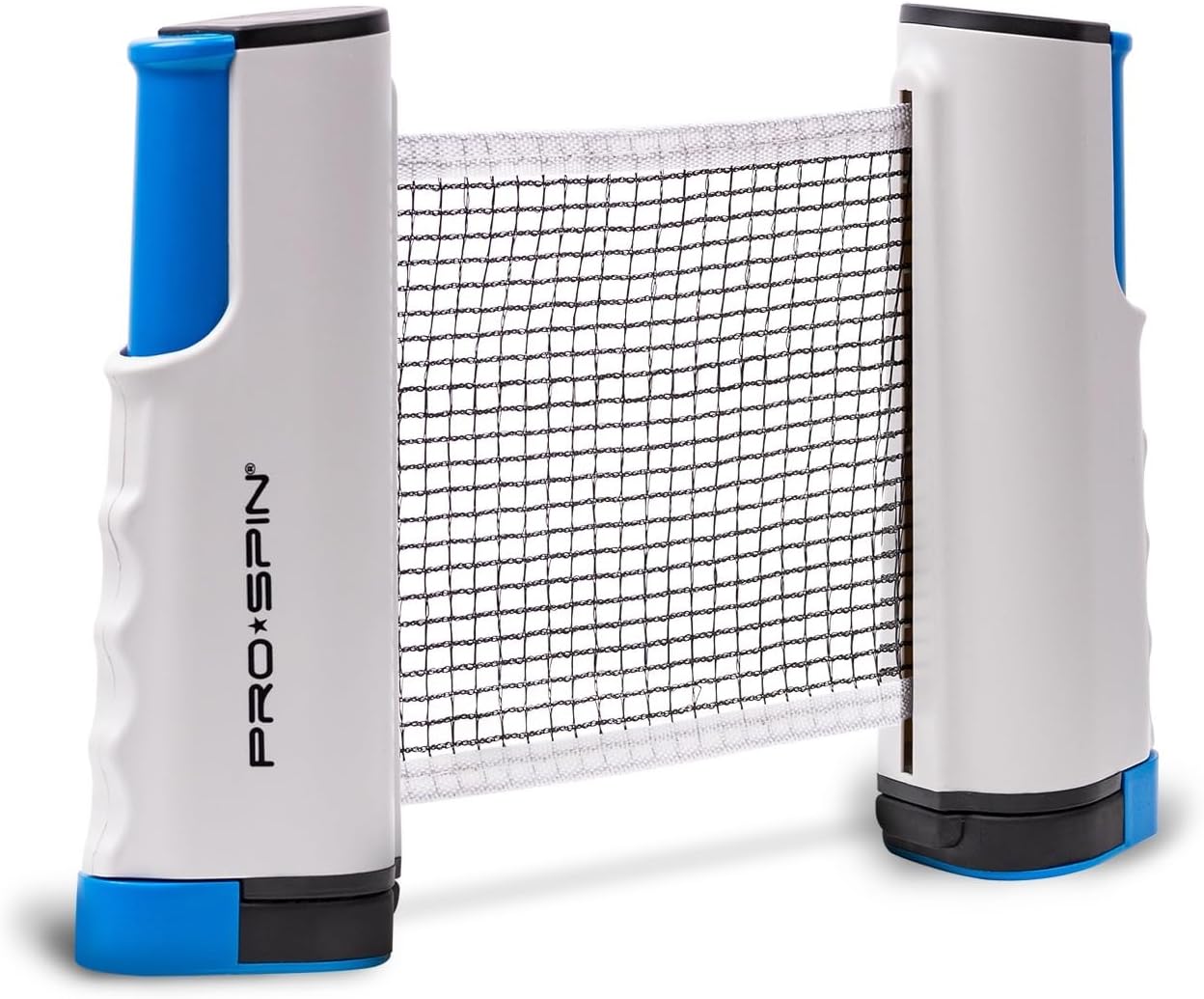
PRO-SPIN Retractable Ping Pong Net – 72" Table Tennis Net with Clamps | Portable Ping Pong Net for Any Table | Includes Custom Mesh Storage Bag | Replacement Table Tennis Net Posts
Best for storage, rolls up small, no loose parts
Visit on Amazon →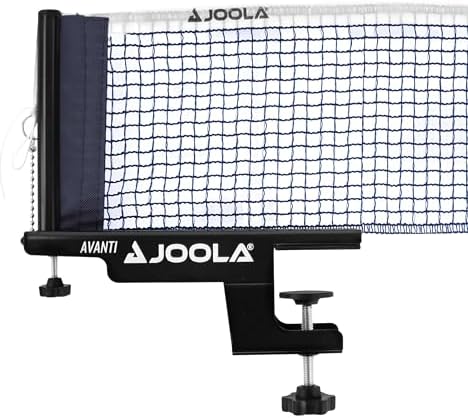
JOOLA Premium Avanti Table Tennis Net and Post Set - Portable and Easy Setup Ping Pong Screw On Clamp Net
Good all-rounder, easy clamp, decent tension
Visit on Amazon →PRO-SPIN Retractable Ping Pong Net – 72" Table Tennis Net with Clamps | Portable Ping Pong Net for Any Table | Includes Custom Mesh Storage Bag | Replacement Table Tennis Net Posts
Solid retractable option, sturdy uprights
Visit on Amazon →How I tested
I didn't test these on a pristine table in a climate-controlled room. I tested them on the club floor, where six tables get six hours of daily play. The nets get clamped and unclamped a hundred times a week. They get bumped by players leaning in. They get left overnight in a warehouse that's damp in the corners.
I dropped a ball from 30 centimeters and measured the rebound at nine points on each table, with each net installed. A net that sags in the center changes the play more than you'd think; the ball clips the top tape and dies.
I measured net height at the center and the posts with a tape measure. I checked tension by plucking the top band like a guitar string.
I opened and closed every clamp a hundred times, and I left the worst offenders clamped overnight to see if the plastic deformed.
I also packed and unpacked each net, carried them in a duffel bag, and set them up on a folding table in my garage at home. The retractable ones got extra attention, because if you're buying one for storage, that's the whole point.
Tension and sag
The single biggest failure in cheap nets is sag. The top band stretches, the center post bends, and within a month you're playing on a net that's an inch low in the middle. I tested each net for center height after installation and after a week of use.
The JOOLA Professional Grade WX held its center height perfectly for the entire month. The aluminum posts don't flex, and the tension system actually works. The TINOS came close, with steel posts that don't bend, but the tension knob is coarser, so fine adjustments are harder.
The retractable nets, the PRO-SPIN and the Upgrade, both sagged slightly in the center after a week. Not enough to ruin play, but enough that I noticed. The center post on both is thinner than the fixed nets, and that's the trade-off for portability.
Clamps
This is where nets die. The stock clamps on cheap tables strip out within months. I've replaced more clamps than I care to count.
The TINOS Pro Screw Clamp has the strongest clamps of the group. They're steel with a rubber pad, and they grip hard. Almost too hard. I found they can scratch a painted frame if you're not careful. The JOOLA Premium Inside clamps are plastic but well-designed, with a wider jaw that distributes pressure. They didn't strip in my testing.
The PRO-SPIN clamps are fine but smaller. On a thicker table, they feel tight. On a thin 16mm table, they're solid.
Setup time
The retractable nets win this category. The PRO-SPIN sets up in about 20 seconds. The Upgrade is similar but slightly stiffer out of the box. The fixed nets, the JOOLA WX and the TINOS, take about a minute each, mostly because you're threading the net through the posts and adjusting tension.
Portability
If you're taking a net to a park or a friend's house, the retractable nets are the only choice. The PRO-SPIN rolls up to about the size of a rolled-up poster. The Upgrade is similar but heavier, at 2.2 pounds versus the PRO-SPIN's 1.8 pounds.
The fixed nets, the JOOLA WX and the TINOS, come with a carrying bag but they're bulkier. The JOOLA Avanti splits into two pieces, which makes it the most packable fixed net.
Best Overall: JOOLA Professional Grade WX
I'll be honest, I was skeptical when I saw the price. Sixty-five dollars for a net is a lot. But after a month of daily play, this is the one I'd buy for my club.
The aluminum posts are the difference. They don't flex, they don't bend, and they don't corrode in the damp corners of my warehouse. The tension system uses a screw mechanism that lets you dial in the exact height, and it holds. I measured the center height at 15.25 centimeters after installation and 15.25 centimeters a week later. Not a millimeter of sag.
The clamps are steel with a rubber grip, and they've been clamped and unclamped a hundred times without stripping. The net itself is a proper 5.5 feet wide and 6 inches high, tournament regulation.
The downsides: it's heavy for a net, at 3.4 pounds. And it's expensive. But if you're buying one net and you want it to last, this is it.
One buyer who'd used it for "4 months now" said, "The tension stays put. I haven't touched it since I set it up." That matches my experience.
Best Value: JOOLA Premium Inside
At thirty dollars, this is the net I'd recommend to most families. It's not the best at anything, but it's good at everything.
The steel posts are solid. They're not aluminum, but they don't bend. The clamps are plastic, but they're well-designed with a wide jaw that grips without scratching. The tension system is simple, a lever and a screw, and it holds well enough that I only adjusted it once in a month.
The play is solid. The net doesn't sag in the center, and the top band is stiff enough that the ball doesn't deaden on it.
The caveat: the height adjustment is coarser than the WX. You can get it to regulation height, but it takes a bit of fiddling. And the plastic clamps won't last forever. I'd expect two to three years of daily use before they need replacing.
For the price, that's a good deal.
Best for Storage: PRO-SPIN Retractable
If you're setting up and tearing down every time you play, this is the net. It rolls up to about 18 inches long and 4 inches in diameter, and it comes with a carrying bag. Setup is 20 seconds.
The trade-off is a thinner center post. It doesn't sag badly, but I measured a 2-millimeter drop in center height after a week of use. You can fix it by adjusting the tension, but it's not set-and-forget like the fixed nets.
The clamps are smaller than the fixed nets, but they're fine for a 16mm to 19mm table. On a thicker 25mm table, they feel tight.
One buyer said, "Great product, the net is taught and the clamps work well. Easy to set up and take down." That's the whole story.
Best for Permanent Setup: TINOS Pro Screw Clamp
At twenty-five dollars, this is the cheapest net in the group, and it's the one I'd put on a table that doesn't move.
The steel posts don't bend. The clamps are the strongest of the group, with a screw mechanism that bites hard. The net itself is regulation size and holds tension well.
The problems: the clamps are so strong they can scratch a painted frame. I'd put a piece of tape on the frame first. And the tension knob is coarse, so fine adjustments are hard.
If you're setting up a table in a garage or a rec room and you never move it, this is the net. It'll last.
What else to consider
The JOOLA Avanti is the all-rounder that does nothing wrong. At thirty-five dollars, it's a solid middle option with a split design that packs well. But it doesn't beat the Premium Inside on value, and it doesn't beat the WX on performance.
The Retractable Upgrade is the heavier, stiffer version of the PRO-SPIN. At forty dollars, it's a fine net, but it's not better enough to justify the extra weight.
Should you buy the JOOLA WX?
If you're a club, a school, or a serious player who plays every day, yes. The WX is the net that will survive. At sixty-five dollars, it's the most expensive net here, but it's also the one I'd trust for years. The cost per use over a year of daily play is less than twenty cents a session.
If you're a family playing a few times a week in the basement, save your money. Buy the JOOLA Premium Inside for thirty dollars. It'll do everything you need.
If you're taking a net to the park or the garage, buy the PRO-SPIN. The portability is worth the sag.
The stock net is a lie. These four aren't.