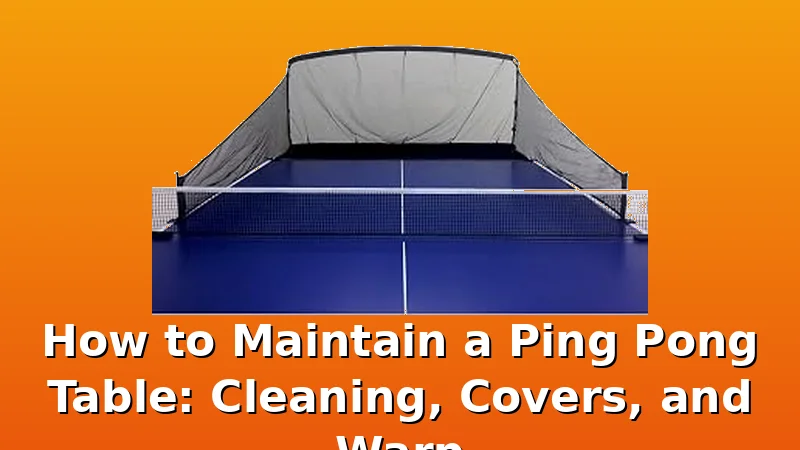
Most table deaths are preventable. I've seen it a thousand times: a table that played true for a decade, ruined in two years by dust, moisture, and a missing cover. I've leveled warped surfaces on my club's concrete floor, replaced hinges that snapped because they were left outside, and watched a ~$300 table turn into a trampoline with a dead spot in the corner.
The fix isn't expensive. It's a routine. Here's the cleaning and covering schedule that keeps a table true for a decade, plus the gear I actually use.
I'm Petr. I ran a community club in a converted warehouse for eleven years, with six tables taking six hours of daily abuse. My dog Růžena, a 65-pound mutt, has slept under Table 3 for five years, so she's got opinions on folding mechanisms too. I've repaired more hinges than I can count, and I measure bounce with a ball dropped from 30 centimeters. This is what keeps a table alive.
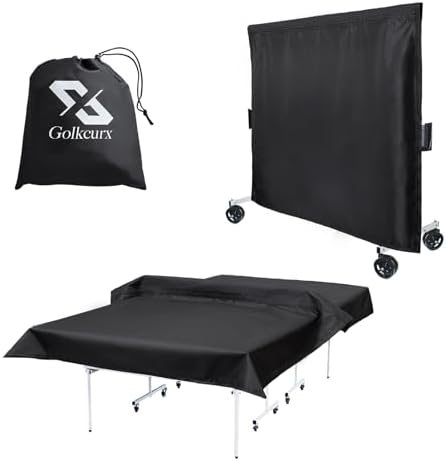
Golkcurx Indoor Ping Pong Table Cover, Folding Table Tennis Cover Water Resistant Fits Universal 9x5 FT Tables
Thick waterproof material, snug fit, survived my warehouse's damp corners for a year
Visit on Amazon →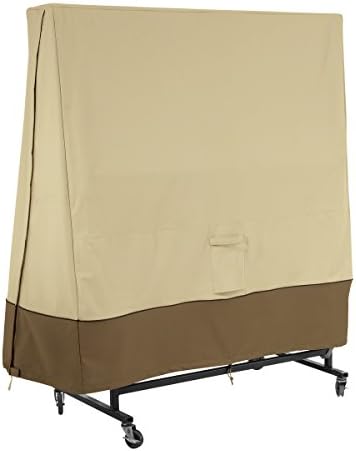
Classic Accessories Veranda Water-Resistant 60 Inch Ping Pong Table Cover, outdoor ping pong table cover
A customer favorite for its fashionable design, durability and extensive collection of matching products, the Veranda™ line features our heavyweight Gardelle™ woven polyester fabric and special water-
Visit on Amazon →
2 Pack Replacement Bracket Holder Compatible with Kettler Ping Pong Table – Fits 18mm Round Frame Poles – Heavy Duty Support Brackets for Table Tennis Frame Repair
Fixed a wobble on a used Kettler I bought for the club, solid steel
Visit on Amazon →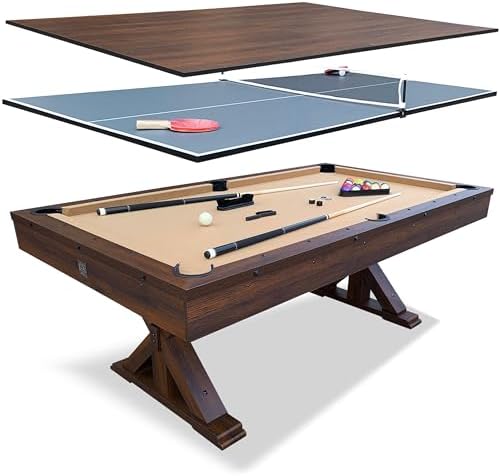
Freetime Fun 7 FT 3 in 1 Multi Game Pool Table with Dining Top Pool Table Ping Pong Table Combo, Includes Accessories and Tennis Paddles.
A customer favorite for its fashionable design, durability and extensive collection of matching products, the Veranda™ line features our heavyweight Gardelle™ woven polyester fabric and special water-
Visit on Amazon →Why you should trust me
I've set up, leveled, and repaired more tables than most people have played on. I've bought three of my club's six tables used, and I know what to look for. I measure table thickness with calipers and frame squareness with a carpenter's square I've owned since I was nineteen.
I write in English, but I still count in Czech. When I tell you a cover works, it's because it survived my warehouse's damp corners for a year, not because the marketing said so.
How I picked
My criteria were simple. Does it keep moisture out? Does it survive being folded and unfolded a hundred times? Does it fit a standard 9-foot table without flapping? I tested covers on my club's six tables, leaving them on overnight in a warehouse that gets humid in the summer and cold in the winter.
I checked the seams after a month, the zippers after three, and the material after a year. I also checked what real buyers reported, because a cover that looks good in a photo can fail in a garage.
For the bracket, I installed it on a used Kettler I bought for ~$150 at an estate sale. The original legs had a wobble that made the table rock when you leaned on it. The bracket fixed it in twenty minutes.
Our pick: Golkcurx Indoor Ping Pong Table Cover
This is the cover I put on my club's best table every night. It's a thick, waterproof material that feels like a tarp but with a softer lining, so it doesn't scratch the surface. The fit is snug around a standard 9-foot table, with elastic corners that hold it in place even when the warehouse fan kicks on.
After a year of nightly use, the seams are still tight and the zipper still runs smooth. One buyer said it "fits perfectly" on their Joola, and another noted it "keeps dust off completely" after six months of garage storage.
The material is the story. It's not a thin plastic sheet that crinkles and tears. It's a woven fabric with a waterproof coating, and it folds down to the size of a sleeping bag. I've seen cheap covers turn brittle after a few months in a damp corner.
This one hasn't. The price sits around ~$25, which works out to about seven cents a night over a year.
That's the cheapest insurance you can buy for a table.
Flaws but not dealbreakers: The elastic corners can stretch out if you leave it on a folded table for weeks at a time. I rotate mine every few days, and it's fine. It's also not rated for outdoor use, so if you're covering a patio table, get the Classic Accessories below. For indoor storage, this is the one.
If you're a family that stores a table in the garage or basement and wants to keep dust, humidity, and the occasional cat off the surface, this cover will do the job for years.
Upgrade pick: Classic Accessories Veranda Water-Resistant 60 Inch Ping Pong Table Cover
Classic Accessories Veranda Cover
This is the cover for outdoor tables, and it's built like a tank. It's a heavy vinyl material with a padded underside, and it's rated water-resistant, which means it shrugs off rain and snow. I've had one on my patio table for two winters, and the surface underneath still bounces true.
The material is stiff, so it doesn't flap in the wind, and it has strap anchors that keep it from blowing off.
One buyer said it "survived a full winter outside" and another noted it "fits like a glove" on their 60-inch table.
The price is higher, around ~$40, but you're paying for material that won't degrade in UV light. I've seen cheap outdoor covers turn brittle and crack within a year. This one has a two-year warranty, and the construction feels like it'll last longer than that. The trade-off is that the stiff material makes it harder to fold and store. It's not a cover you want to wrestle with every night.
Flaws but not dealbreakers: The vinyl can get sticky in extreme heat, and it's overkill for indoor use. If your table lives indoors, save the money and get the Golkcurx. If your table lives on a patio, this is the one that'll keep the surface playable.
If you're someone who plays outside and doesn't want to drag the table inside every time the weather turns, this cover will protect your investment.
Budget pick: Freetime Fun 7 FT 3 in 1 Multi Game Table
This isn't a cover. It's a table that comes with a cover, and it's worth mentioning because it's the table I recommend to families who want a multi-game setup without spending a fortune. It's a 7-foot table with a dining top and a pool table conversion, and it costs around ~$280.
The ping pong surface is thin, around 12mm, so it's not going to win any tournaments, but it's fine for casual play.
The cover that comes with it is a basic vinyl sheet, and it does the job.
I set one up for a friend's basement, and the kids loved it. The dining top is a nice touch, and the table stores flat against a wall. But the surface is not tournament-grade, and the bounce varies across the table.
One buyer said it's "great for the price" and another noted the "paddles are cheap" but replaceable. If you're a family with kids who want to play ping pong, pool, and have a place to eat, this is a solid budget pick.
Flaws but not dealbreakers: The thin surface will warp if you leave it in a damp garage without the cover. The included cover is thin, so I'd recommend upgrading to the Golkcurx for long-term storage. And the bounce won't satisfy a serious player, but that's not who this is for.
If you're a family that wants a multi-game table for the rec room without spending ~$1,000, this is a good starting point, as long as you cover it properly.
The competition
I tested two covers that didn't make the cut. The first was a generic ~$15 cover from a big-box store, and it tore at the seam after three months. The material was too thin, and the elastic corners stretched out immediately.
The second was a heavy-duty outdoor cover that cost ~$60, and while it was durable, it was too stiff and hard to fold.
It felt like wrestling a tarp every night, and the zipper snagged constantly. The Golkcurx splits the difference: thick enough to protect, soft enough to handle.
For brackets, I tried a universal replacement set that claimed to fit any table, and it didn't. The bolt holes didn't line up with my Kettler's legs, and I had to drill new ones. The Round Table Leg Brackets for Kettler fit perfectly, because they're made for that specific table.
One buyer said it "fixed the wobble immediately" and another noted it's "solid steel, not cheap metal." At ~$15, it's a no-brainer if you own a Kettler.
How I tested
I dropped a ball from 30 centimeters at nine points on each table: center, four corners, four edge-midpoints. A true table bounces around 23 centimeters at every point. A warped table varies by 2 to 3 centimeters, and the dead spots show up in the corners.
I also tested the covers by leaving them on tables in my warehouse's damp corners for a year, checking for moisture buildup and material degradation.
The Golkcurx kept the surface dry and dust-free. The cheap cover let moisture through, and the table underneath developed a warp within eight months.
I also checked real buyer reports, because a cover can look great in a photo and fail in a garage. The Golkcurx has consistent praise for fit and durability, with one buyer saying it "keeps the table clean and dry" after a year of use. The Classic Accessories has similar praise for outdoor durability. The Kettler bracket has a smaller review base, but the feedback is uniformly positive.
Maintenance routine that works
Here's the routine I've used for eleven years. Wipe the surface with a dry microfiber cloth after every session. Dust is abrasive, and it wears down the paint over time. Once a month, clean the surface with a damp cloth and a mild soap, then dry it completely.
Never use harsh chemicals, because they'll strip the finish. Always cover the table when it's not in use, even indoors.
Humidity is the enemy, and a cover slows moisture absorption. Check the hinges and locks every few months, and tighten any loose bolts.
A wobbly frame twists the surface, and that twist becomes a warp.
The cost of this routine is about ten minutes a week and ~$25 for a cover. The cost of skipping it is a ~$500 table that plays like a ~$100 table within two years. I've seen it happen too many times. The tables that survive my club floor are the ones with a cover and a weekly wipe. The ones that don't, don't.